
Installing a snow plow on a work truck is a practical investment for contractors, property maintenance companies, and fleet operators preparing for winter. However, installation costs can vary significantly depending on the truck, plow equipment, and complexity of the installation. Understanding these factors can help businesses budget accurately and select equipment that meets their operational needs.
The cost to install a snow plow on a truck depends on more than the price of the plow itself. Vehicle compatibility, mounting hardware, electrical components, labor requirements, and optional accessories all contribute to the final expense. Before scheduling an installation, it’s important to understand what goes into the process.
Truck Compatibility and Plow Configuration
One of the biggest factors affecting snow plow installation costs is the truck’s compatibility with the selected equipment. Not every truck can safely accommodate every plow, and choosing the wrong configuration can create problems with weight distribution, handling, and vehicle performance.
Before installation, technicians should evaluate several vehicle specifications, including:
- Gross Vehicle Weight Rating (GVWR) – Determines the maximum allowable loaded weight of the truck.
- Front Gross Axle Weight Rating (FGAWR) – Establishes the maximum load the front axle can support.
- Suspension capacity – Influences how the truck handles the additional weight of the plow.
- Manufacturer compatibility – Helps determine which plow models and mounting systems are approved for the vehicle.
- Existing equipment – Additional accessories or modifications may affect available payload capacity.
Plow configuration also influences pricing. Straight-blade plows generally have simpler mechanical designs, while V-plows and expandable-wing systems include additional hydraulic functions and components.
Blade width, construction materials, and intended application also matter. A contractor clearing large commercial parking lots may require different equipment than someone maintaining smaller residential driveways.
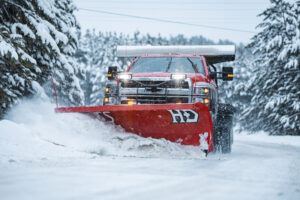
Professional truck snow plow installation begins with selecting equipment that fits the truck’s capabilities and intended workload.
Electrical Components, Mounting Hardware, and Labor
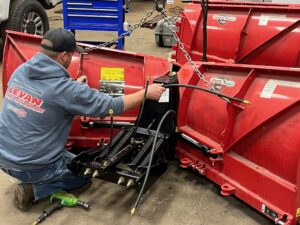
A complete snow plow installation involves several interconnected systems. Beyond attaching the blade, technicians must install the appropriate mounting hardware, electrical connections, hydraulic components, and operating controls.
Most modern snow plows use vehicle-specific mounting kits designed to connect the plow assembly to the truck’s frame. Depending on the vehicle and equipment, installation may require additional brackets, wiring harnesses, or other compatible components.
Electrical integration is another important consideration. Snow plow systems may require connections for lighting, hydraulic pump operation, and in-cab controls. Proper wiring and circuit protection are essential for reliable performance.
Labor costs can vary based on installation complexity. A straightforward installation using compatible equipment may require less time than a project involving additional electrical work, vehicle modifications, or troubleshooting existing components.
If you are planning to install a plow on a truck, it is important to account for the complete installation process rather than comparing equipment prices alone.
Professional installation should also include operational testing to verify that the plow raises, lowers, angles, and operates correctly before the truck enters service.
Accessories, Additional Equipment, and Long-Term Maintenance
Optional accessories can increase the initial installation cost, but some may improve efficiency, visibility, or equipment protection during winter operations.
Common snow plow accessories include blade markers, snow deflectors, cutting edges, additional lighting, and back-dragging components. The appropriate accessories depend on the truck’s intended application and operating environment.
For commercial fleets, equipment durability and maintenance requirements should also factor into purchasing decisions. A lower initial price does not necessarily translate into the lowest long-term operating cost.
Hydraulic systems, electrical connections, cutting edges, mounting hardware, and moving components require periodic inspection and maintenance. Routine service can help identify wear before it leads to equipment failure during a snow event.
When calculating the cost to install a snow plow on a truck, fleet operators should consider both the initial investment and expected maintenance expenses.
Working with an experienced equipment provider can help businesses select compatible components and plan for ongoing service needs.
Snow plow installation costs depend on several factors, including truck specifications, plow configuration, mounting requirements, electrical integration, labor, and accessories. Understanding these variables helps truck owners make informed equipment decisions and prepare for winter operations. Levan Machine & Truck Equipment provides professional truck snow plow installation and equipment services for contractors, businesses, and fleet operators. Our team can help evaluate your truck, identify suitable plow equipment, and complete installations designed for dependable performance. Whether you are preparing a single work truck or expanding your commercial snow removal fleet, contact us today to discuss your installation needs and learn more about the equipment options available for your vehicle.