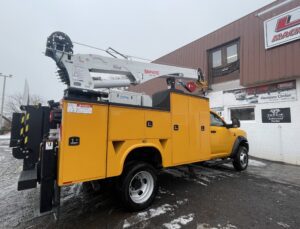
For utility, construction, and field service fleets, the right truck body can significantly affect productivity. Crews need secure tool storage, sufficient payload capacity, and reliable lifting equipment that allows them to handle heavy components safely and efficiently at the jobsite. A properly configured crane body truck combines these capabilities into one mobile work platform.
However, not every crane body is designed for the same workload. Crane capacity, body construction, compartment configuration, chassis specifications, and available accessories should all be evaluated before selecting an upfit. For fleets, comparing crane truck bodies based on real-world operating requirements can help ensure the finished truck supports both current workloads and future demands.
Match Crane Capacity to the Workload
One of the first considerations when choosing a crane body is what the crane will actually need to lift. Utility crews may handle transformers, pumps, motors, and other equipment, while construction and service fleets may need lifting capabilities for machinery components, compressors, generators, or heavy replacement parts.
Crane selection should account for more than maximum lifting capacity. Fleet managers also need to consider load weight at different boom extensions, operating reach, crane mounting requirements, and the stability of the completed vehicle.
Important factors include:
- Typical and maximum load weights
- Required horizontal and vertical reach
- Frequency of crane operation
- Available payload capacity
- Chassis gross vehicle weight rating
- Stabilizer or outrigger requirements
- Jobsite operating conditions
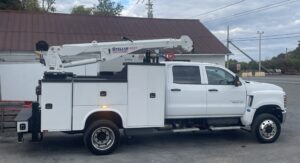
A service body crane must be properly matched to both the truck body and chassis. Adding a crane, tools, equipment, and materials affects overall vehicle weight and weight distribution, making careful upfit planning essential. Selecting equipment based on actual operating conditions rather than simply choosing the largest available crane can produce a more practical and efficient work truck.
Compare Storage and Body Configurations
The crane may be the most noticeable component, but storage configuration is equally important. Service truck crane bodies should give technicians organized access to the tools, parts, and equipment they use throughout the day.
Compartment dimensions, shelving, drawers, door configurations, and load space can all be customized around a fleet’s workflow. Utility technicians may prioritize specialized tool storage and electrical equipment, while construction crews may need larger compartments for power tools, rigging equipment, and replacement components.
A utility bed with a crane can also be configured with accessories such as additional lighting, work surfaces, ladder storage, air compressors, welders, or other job-specific equipment.
Before choosing a body, fleet managers should inventory what crews routinely carry. Consider where each item will be stored, how frequently employees need to access it, and how added equipment affects payload.
Thoughtful organization can reduce time spent searching for tools and repeatedly loading or unloading equipment. It also allows the vehicle to function as a purpose-built mobile workspace instead of simply a truck with a crane attached.
Consider Durability, Maintenance, and Future Fleet Needs
A work truck is a long-term investment, so the body should be selected with durability and serviceability in mind. Crane truck bodies used in utility and construction environments may regularly encounter heavy loads, road salt, moisture, dirt, and demanding jobsites.
Body material, structural reinforcement, corrosion protection, compartment construction, and mounting hardware can all influence long-term performance. Fleet managers should also consider how easily the crane and other installed equipment can be inspected, maintained, and repaired.
Future requirements matter as well. A fleet may eventually need additional storage, upgraded lighting, different accessories, or new equipment. Planning for these possibilities during the initial upfit can make later modifications easier.
Working with an experienced truck equipment provider also helps ensure that the crane body truck is designed as a complete system. The chassis, body, crane, stabilizers, storage, and accessories need to work together rather than being selected independently.
Choosing among service truck crane bodies requires more than comparing crane specifications. Levan Machine & Truck Equipment works with utility, construction, and service fleets to develop work truck solutions built around real operating needs. Our team can help you evaluate your options and create an upfit that supports your crews in the field. Contact Levan Machine & Truck Equipment today to discuss your crane body requirements and find the right solution for your operation.